
For many ecommerce entrepreneurs, one of the first and most important decisions is where to sell. Should you start by selling on Amazon, or should you focus on building your own ecommerce brand from day one?
Amazon offers instant access to millions of shoppers, trusted checkout, and a fast path to validating products. Building your own brand, on the other hand, gives you complete control over your business, customer relationships, pricing, and long-term profitability.
In 2026, however, this is no longer an either-or decision. Consumer shopping habits have evolved, competition has intensified, and relying on a single sales channel has become increasingly risky.
The most successful sellers are building businesses that combine marketplace visibility with brand ownership, allowing them to grow sustainably while reducing dependency on any one platform.
In this guide, we’ll compare the pros and cons of selling on Amazon versus building your own brand, explore which approach is best for different types of sellers, and explain why a hybrid strategy is becoming the preferred path for long-term ecommerce success.

Selling on Amazon vs Building Your Own Brand: Quick Answer
Selling on Amazon is ideal for reaching customers quickly, validating products, and generating early sales. Building your own brand provides greater control, stronger customer relationships, higher profit margins, and long-term business value. For many businesses in 2026, combining both approaches offers the best balance between growth and ownership.
Amazon vs Building Your Own Brand: Quick Comparison
| Factor | Selling on Amazon | Building Your Own Brand |
|---|---|---|
| Customer Traffic | Built-in audience | Generate your own traffic |
| Setup Speed | Fast | Moderate |
| Customer Data | Limited access | Full ownership |
| Branding | Limited | Complete control |
| Marketplace Fees | Higher | Lower overall |
| Profit Margins | Lower | Higher |
| Competition | Very high | Easier to differentiate |
| Long-Term Value | Platform dependent | Business-owned asset |
Key Takeaway: Amazon helps you launch quickly, while building your own brand creates a business that you truly own.
What Does Selling on Amazon vs Building Your Own Brand Mean?
Although both approaches involve selling products online, they represent two very different business models.
Selling on Amazon
When you sell on Amazon, you’re operating within an established marketplace. Amazon provides customer traffic, payment processing, fulfillment options through FBA, and a trusted shopping experience.
However, Amazon also controls much of the customer journey, including visibility in search results, marketplace policies, and access to customer information.
Building Your Own Brand
Building your own brand means selling through channels you control, such as your ecommerce website. Instead of relying on marketplace traffic, you invest in growing your own audience through SEO, content marketing, social media, paid advertising, and email marketing.
This approach gives you ownership of your customer relationships, pricing strategy, and overall brand experience.
The difference isn’t simply about choosing a platform it’s about deciding whether you want to build short-term sales or long-term business equity.
Pros and Cons of Selling on Amazon
Amazon remains one of the world’s largest ecommerce marketplaces, making it an attractive starting point for many businesses.
Advantages of Selling on Amazon
1. Instant Access to Millions of Customers
One of Amazon’s biggest advantages is its enormous customer base. Instead of building traffic from scratch, sellers can immediately reach shoppers who are actively searching for products.
For new businesses, this can significantly reduce the time needed to generate the first sales.
2. Faster Product Validation
Launching a new product on Amazon allows sellers to quickly understand market demand.
Sales data, reviews, and customer feedback provide valuable insights before investing heavily in branding or marketing.
3. Higher Initial Trust
Customers already trust Amazon’s checkout process, delivery network, and return policies.
This established trust often results in higher conversion rates compared to newly launched ecommerce websites.
4. Simplified Fulfillment
Programs like Fulfillment by Amazon (FBA) handle storage, shipping, returns, and customer service, allowing businesses to focus more on sourcing and product development.
Disadvantages of Selling on Amazon
1. High Selling Costs
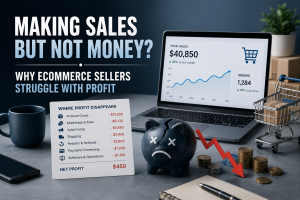
Referral fees, fulfillment charges, advertising expenses, storage fees, and other operational costs can significantly reduce profit margins.
Many brands eventually explore ways to reduce ecommerce costs by diversifying beyond a single marketplace and improving operational efficiency.
As competition increases, many sellers also spend more on Amazon advertising just to maintain visibility.
2. Limited Customer Ownership
Perhaps the biggest limitation is the lack of direct customer ownership.
Amazon controls customer data, making it difficult to build email lists, create loyalty programs, or encourage repeat purchases outside the platform.
3. Intense Competition
Every successful product attracts competitors.
Private-label sellers, copycat listings, and aggressive price competition can make it challenging to maintain differentiation.
4. Platform Dependency
Changes to Amazon’s algorithms, policies, fees, or account status can directly impact your business.
When a significant portion of revenue depends on a single marketplace, sellers have limited control over external changes.
Pros and Cons of Building Your Own Brand
Building your own ecommerce brand requires greater effort initially, but it also creates opportunities that marketplaces cannot offer.
Advantages of Building Your Own Brand
1. Complete Business Control
You decide how your products are presented, how your website looks, what pricing strategy to use, and how customers experience your brand.
This flexibility helps businesses create a stronger identity in competitive markets.
2. Higher Profit Margins
Without paying substantial marketplace commissions on every sale, businesses can often retain a larger share of revenue.
This creates greater flexibility to reinvest in marketing, customer experience, and product development.
3. Own Your Customer Relationships
Unlike marketplace selling, your own ecommerce store allows you to collect customer data, build email campaigns, improve retention, and increase customer lifetime value.
These long-term relationships often become one of a brand’s most valuable assets.
4. Build a Long-Term Business Asset
A recognizable brand has value beyond monthly sales.
Strong customer loyalty, repeat purchases, and direct relationships contribute to creating a business that can continue growing independently of any single marketplace.
Challenges of Building Your Own Brand
While building your own ecommerce brand offers greater control and long-term value, it also comes with challenges that sellers should be prepared for.
1. No Built-In Traffic
Unlike Amazon, your website won’t automatically attract shoppers. Generating traffic requires consistent investment in SEO, content marketing, paid advertising, social media, and email marketing.
Without a clear customer acquisition strategy, even the best products can struggle to gain visibility.
2. Slower Initial Growth
Building brand awareness takes time. New ecommerce businesses often experience slower sales during the early stages while they establish credibility and attract their first customers.
Although growth may be slower initially, it can become more sustainable over time as customer loyalty and organic traffic increase.
3. Greater Marketing Responsibility
When you own your brand, you’re responsible for every aspect of marketing from creating content and running advertising campaigns to optimizing your website for conversions.
Success depends not only on having a great product but also on building trust and delivering a consistent customer experience.
4. Operational Complexity
Managing your own store means overseeing inventory, shipping, customer support, payment processing, and technical maintenance. While ecommerce platforms have simplified many of these tasks, they still require more involvement than selling exclusively through a marketplace.
Why the Amazon vs Brand Debate Has Changed in 2026
A few years ago, many sellers believed they had to choose between Amazon or their own website.
Today’s ecommerce landscape is very different.
Consumers discover products through Google searches, social media platforms, influencers, online communities, and branded websites before making purchasing decisions. They expect consistent experiences across multiple channels rather than relying on a single marketplace.
At the same time, increasing marketplace competition, rising advertising costs, and changing platform policies have encouraged businesses to reduce marketplace dependency and diversify their sales channels.
Instead of asking, “Should I sell on Amazon or build my own brand?“, successful sellers are now asking:
- How can I reach more customers?
- How can I reduce marketplace dependency?
- How can I build lasting customer relationships?
- How can I increase profit margins while maintaining steady growth?
The answer for many businesses is no longer choosing one approach over the other—it’s combining both strategically.
The Best Strategy in 2026: A Hybrid Approach
Many successful ecommerce brands now use Amazon as one part of a broader growth strategy instead of relying on it as their only sales channel.
Step 1: Use Amazon to Acquire Customers
Amazon remains an excellent platform for:
- Launching new products
- Validating market demand
- Building product reviews
- Generating initial sales
- Reaching customers who already shop on marketplaces
This allows sellers to establish traction without waiting months to build website traffic.
Step 2: Build Your Brand for Long-Term Growth
While Amazon helps generate awareness, your own brand becomes the foundation for sustainable growth.
By investing in your website, SEO, content marketing, email campaigns, and customer experience, you can:
- Build customer loyalty
- Encourage repeat purchases
- Increase customer lifetime value
- Strengthen brand recognition
- Increase ecommerce profit margins through stronger customer retention and direct sales.
Step 3: Diversify Your Sales Channels
As your business grows, expanding beyond a single platform helps reduce risk.
Selling through multiple channels including your website, marketplaces, and other ecommerce platforms creates a more resilient business that isn’t dependent on changes to one marketplace’s policies or algorithms.
Where Traditional Selling Models Fall Short
Although the hybrid strategy offers significant advantages, implementing it isn’t always straightforward.
Amazon provides convenience, but sellers sacrifice customer ownership and face increasing competition.
Building an independent ecommerce store offers complete control but requires significant investment in traffic generation, marketing, and operations before meaningful growth occurs.
This creates a common challenge for many businesses: they want the reach of a marketplace without giving up control of their brand and customer relationships.
A Better Alternative for Modern Sellers
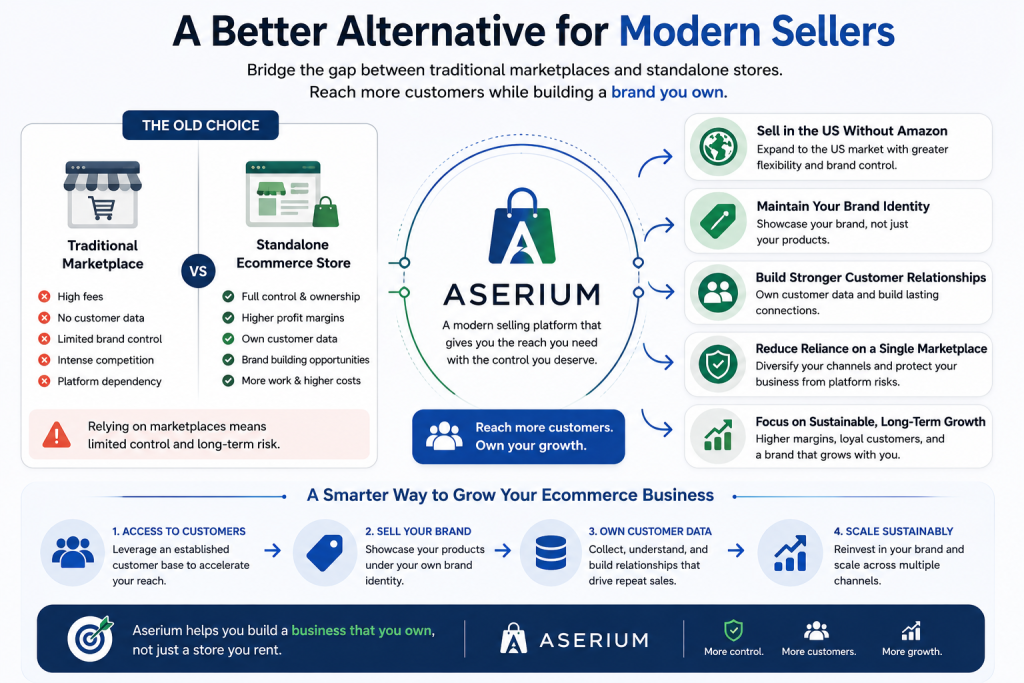
As ecommerce continues to evolve, new selling models are emerging to bridge the gap between traditional marketplaces and standalone ecommerce stores.
Rather than forcing sellers to choose between convenience and ownership, these platforms are designed to provide access to customers while allowing businesses to maintain their brand identity and build direct relationships.
Aserium is built around this modern approach.
Instead of operating like a traditional marketplace, Aserium enables sellers to:
- Sell in the US without Amazon while maintaining greater flexibility and brand control.
- Maintain their own brand identity instead of competing through generic product listings
- Build stronger customer relationships
- Reduce reliance on a single marketplace
- Focus on sustainable, long-term business growth
For sellers who want greater control without taking on all the complexity of building an ecommerce ecosystem entirely from scratch, this approach offers a practical path forward.
Which Option Is Right for You?
Choose Amazon if you:
- Are launching your first product
- Want to validate market demand quickly
- Need access to a large customer base
- Have limited marketing resources
Build Your Own Brand if you:
- Want complete ownership of your business
- Prioritize higher long-term profit margins
- Want to build customer loyalty
- Are prepared to invest in marketing and brand development
Consider a Hybrid Strategy if you:
- Want the benefits of both approaches
- Aim to reduce marketplace dependency
- Plan to expand internationally
- Want sustainable, long-term ecommerce growth
Common Mistakes to Avoid
Many ecommerce sellers limit their growth by making avoidable mistakes.
Relying entirely on Amazon increases business risk and makes revenue vulnerable to marketplace changes.
Launching a website without a traffic strategy often leads to disappointing results. A great online store still needs SEO, paid advertising, content marketing, and social media to attract visitors.
Ignoring brand building is another common mistake. Even marketplace sellers benefit from creating memorable branding that encourages customer trust and recognition.
Finally, scaling too quickly without strong systems can create operational challenges that impact customer experience and profitability.
Final Verdict
Selling on Amazon and building your own brand are not competing strategies they serve different purposes.
Amazon provides an excellent opportunity to launch products, validate demand, and reach a large audience quickly. Building your own brand creates long-term value through customer ownership, stronger profit margins, and greater business control.
In 2026, the most successful ecommerce businesses combine both approaches rather than depending entirely on one platform.
By diversifying sales channels, investing in your brand, and building direct customer relationships, sellers can create a more resilient and profitable business for the future.
If you’re looking for a smarter way to grow beyond traditional marketplaces while maintaining greater ownership of your business, Aserium offers a modern approach designed for today’s ecommerce sellers.
Ready to build a business – not just sell products?
Start selling with Aserium and take the next step toward sustainable ecommerce growth.
Frequently Asked Questions
-
Is selling on Amazon still worth it in 2026?
Yes. Amazon remains one of the fastest ways to reach customers and validate products. However, relying exclusively on Amazon can limit customer ownership and long-term growth.
-
Can I build my own brand while selling on Amazon?
Absolutely. Many successful businesses use Amazon to acquire customers while investing in their own website, content, and marketing to build a recognizable brand.
-
Which option is more profitable?
Building your own brand often delivers higher long-term profit margins because you avoid many marketplace fees and own your customer relationships. Amazon, however, can generate faster initial sales.
-
Why is customer ownership important?
Owning customer data allows businesses to create email campaigns, improve retention, encourage repeat purchases, and increase customer lifetime value—advantages that are difficult to achieve when selling exclusively through marketplaces.
-
What is the best ecommerce strategy in 2026?
For many businesses, the most effective strategy is a hybrid approach: use Amazon for customer acquisition while building your own brand to strengthen customer relationships, improve profitability, and reduce marketplace dependency.