
The Revenue Trap: Why Ecommerce Sellers Struggle With Profit
Your ecommerce store is generating orders. Revenue is growing month after month. On the surface, everything looks successful.
But here is the question many sellers quietly struggle with:
If the business is generating $40,000 or more in monthly sales, why does cash still feel tight?
The answer often comes down to revenue vs profit in ecommerce. Many sellers celebrate growing sales while overlooking the costs that determine whether their business is actually making money. Marketplace dashboards highlight revenue, but they rarely reveal how much profit remains after marketplace fees, advertising, shipping, returns, payment processing, and operational expenses.
The result? Many ecommerce businesses generate impressive revenue but operate with surprisingly low profit margins.

Many ecommerce sellers struggle with profit because they focus on increasing revenue instead of improving margins. Marketplace sales can look impressive, but without healthy margins, long-term growth becomes difficult. Understanding revenue vs profit in ecommerce is essential because a business cannot scale sustainably on sales alone.
Revenue may look impressive, but profit is what determines whether a business can survive, grow, and scale over the long term. Before investing in more advertising or chasing higher sales, every seller should understand the true difference between revenue and profit in ecommerce.
So the real question becomes:
Are you building a profitable business or just processing orders?
The good news is that this problem can be fixed. Once sellers understand where profits disappear, they can start making smarter pricing, marketing, and channel decisions.
Revenue vs Profit in Ecommerce: What’s the Difference?
One of the biggest mistakes ecommerce sellers make is confusing revenue with profit. Understanding revenue vs profit in ecommerce is essential because high sales do not always translate into a healthy business.
What Is Revenue?
Revenue is the total amount of money your store generates from sales.
If your ecommerce business sells $40,000 worth of products this month, your revenue is $40,000.
But revenue does not account for expenses.
That is where many sellers get misled.
What Is Profit?
Profit is the money left after all business costs are deducted.
These expenses include:
- Product sourcing or manufacturing
- Shipping and fulfillment
- Marketplace fees
- Advertising costs
- Payment processing
- Returns and refunds
- Software and operations
This final amount is your actual earnings.
For example:
| Monthly Revenue | $40,000 |
| Product Costs | -$16,000 |
| Marketplace Fees | -$6,000 |
| Advertising | -$7,000 |
| Shipping & Fulfillment | -$4,000 |
| Returns & Operations | -$4,000 |
Net Profit Remaining: $3,000
That means the business kept only 7.5% of total revenue.
This is why the revenue vs profit ecommerce conversation matters so much. Large sales numbers can hide weak margins and unhealthy business models.
6 Reasons Ecommerce Sellers Lose Money Despite High Revenue
Many ecommerce sellers are not losing money because of poor products. They are losing money because hidden costs slowly destroy profitability.
Here are the biggest reasons why sellers lose money even while revenue grows.
1. Hidden Costs Add Up Fast
Most sellers calculate product cost but ignore smaller operational expenses.
These include:
- Packaging
- Warehousing
- Subscription tools
- Customer support
- Chargebacks
- Inventory storage
Individually, these costs may seem small. Together, they can significantly reduce ecommerce profit margin.
2. Marketplace Fees Eat Into Revenue
Selling on marketplaces like Amazon or Walmart provides exposure, but it also comes with high fees.
Common costs include:
- Referral commissions
- Fulfillment fees
- Storage fees
- Sponsored ad costs
For many sellers, marketplaces take 30%–45% of every sale before profit is even calculated.
The more dependent sellers become on marketplaces, the harder it becomes to maintain strong margins.
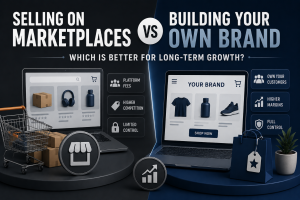
As marketplace costs continue rising, many ecommerce businesses are now exploring independent selling models that provide greater control over pricing, customer relationships, and profitability. Platforms like Aserium help sellers reduce marketplace dependency while building a more sustainable ecommerce business.
3. Advertising Costs Keep Rising
Customer acquisition has become more expensive across:
- Google Ads
- Meta Ads
- Amazon PPC
Many sellers continue increasing ad spend just to maintain the same sales volume.
If advertising costs rise faster than profitability, revenue growth becomes meaningless.
A business can scale sales while simultaneously shrinking profit.
4. Returns Are More Expensive Than Expected
Returns do not simply reduce revenue.
They also create additional costs:
- Reverse shipping
- Restocking labor
- Damaged inventory
- Refund processing
- Customer service time
In categories with high return rates, profitability can disappear quickly.
5. Constant Discounting Reduces Margins
Discounts may increase short-term sales, but they often hurt long-term profitability.
Over time, customers begin expecting promotions, making it difficult to sell products at full price.
This creates a dangerous cycle:
- Lower margins
- Higher sales pressure
- Increased dependence on volume
Many sellers become trapped chasing revenue while profits continue shrinking.
6. No Repeat Customers
One-time customers are expensive.
If every sale requires fresh advertising spend, customer acquisition costs remain high forever.
This is a major weakness of marketplace-heavy businesses because marketplaces control the customer relationship.
Without customer ownership, sellers struggle to:
- Build email lists
- Improve retention
- Increase repeat purchases
- Grow lifetime value
And without repeat customers, long-term profitability becomes difficult.
Independent ecommerce ecosystems like Aserium help sellers create direct customer relationships, giving businesses better opportunities to improve retention, customer lifetime value, and overall profitability.
These are the most common reasons why ecommerce sellers lose money, even when their monthly sales continue growing. Understanding why ecommerce sellers struggle with profit is the first step toward building a more sustainable ecommerce business. Once you identify where your margins are being lost, you can make smarter decisions about pricing, marketing, operations, and sales channels.
How to Improve Ecommerce Profit Margins
The solution is not simply generating more sales. The solution is building a healthier ecommerce business model.
Calculate True Cost Per Order
Every seller should know the exact cost of each order.
Include:
- Product cost
- Shipping
- Advertising
- Returns
- Marketplace fees
- Operational expenses
Without accurate numbers, pricing decisions become guesswork.
Set Clear Margin Targets
Profitable businesses operate with defined margin goals.
For many ecommerce sellers:
- Marketplace businesses target 10–15% net margin
- D2C brands target 15–30% net margin
If margins are below target, optimization should happen before scaling.
Growing an unprofitable business only increases losses.
Eliminate Low-Margin Products
Not all products deserve to stay in your catalog.
Some SKUs generate revenue while contributing very little actual profit.
Regularly audit products based on:
- Margin performance
- Return rates
- Ad spend
- Operational complexity
Removing weak products often improves profitability faster than adding new ones.
Build Owned Sales Channels
One of the best ways to improve ecommerce profitability is reducing dependence on marketplaces.
Owned channels provide:
- Better pricing control
- Lower transaction fees
- Customer data ownership
- Stronger repeat purchase potential
This is why many sellers are shifting toward more independent ecommerce models.
Platforms like Aserium are designed to help sellers establish a stronger direct selling presence in the US market while reducing the margin pressure created by marketplace-heavy selling models.
Reduce Marketplace Dependency
Marketplaces can help businesses scale quickly, but relying entirely on them creates long-term risks:
- Rising fees
- Algorithm changes
- Competitive pricing pressure
- Limited customer ownership
A more sustainable strategy is balancing marketplace visibility with owned ecommerce channels.
This allows sellers to improve margins while building stronger brand equity and customer relationships over time.
Related Guide: Learn how to build a more resilient business in our guide on How to Reduce Marketplace Dependency as a Seller.
How Aserium Helps Ecommerce Sellers Improve Profitability
Aserium is built for ecommerce sellers who want to grow sustainably in the US market without sacrificing profitability to rising marketplace costs.
The platform helps sellers:
- Reduce dependency on high-fee marketplaces
- Improve ecommerce profit margins
- Build direct customer relationships
- Increase repeat purchase opportunities
- Gain more control over pricing and branding
For sellers focused on long-term profitability instead of vanity revenue metrics, building independent selling channels can create a major competitive advantage.
6 Quick Ways to Increase Ecommerce Profit Margin
Here are a few fast actions sellers can take immediately:
- Audit your top 10 products by profit margin
- Identify products with the highest return rates
- Compare customer acquisition cost against repeat purchase rate
- Review which sales channels generate the strongest margins
- Reduce unnecessary discounting
- Recalculate pricing based on real operational costs
Small profitability improvements across multiple areas can create major long-term impact.
Conclusion
Revenue alone does not build a sustainable ecommerce business.
Profit does.
Too many sellers focus on growing sales while ignoring the hidden costs reducing their margins behind the scenes. The result is a business that looks successful externally but struggles financially internally.
This is exactly why many ecommerce sellers struggle with profit despite achieving consistent revenue growth. Sustainable success comes from improving profitability, not simply increasing sales volume.
The key is understanding your numbers, improving your ecommerce profit margin, and building stronger direct customer relationships instead of relying entirely on marketplaces.
Before scaling further, take time to audit your costs, optimize weak areas, and focus on profitable growth.
Because in ecommerce, revenue gets attention but profit builds real businesses.
Ready to move beyond marketplace dependency and build a more profitable ecommerce business?
Explore how Aserium helps sellers improve margins, build direct customer relationships, and grow smarter in the US ecommerce market.
Ready to build a business – not just sell products?
What is a good ecommerce profit margin?
Most successful ecommerce businesses aim for a net profit margin between 10% and 30%, depending on their business model, product category, and customer acquisition costs.
Why is my ecommerce business making sales but no profit?
High marketplace fees, rising advertising costs, shipping expenses, returns, and frequent discounting can reduce profitability even when revenue is growing.
What is the difference between revenue and profit in ecommerce?
Revenue is the total amount earned from sales, while profit is what remains after all expenses including product costs, marketing, shipping, marketplace fees, and operations have been deducted.