
Something significant has changed in ecommerce.
A few years ago, success was largely about winning visibility on major marketplaces. Sellers focused on optimizing listings, improving reviews, and increasing ad spend to stay competitive. While marketplaces still offer valuable access to buyers, many successful brands are no longer relying on them as their primary growth engine.
Today, the fastest-growing ecommerce businesses are building assets they own: customer relationships, brand equity, first-party data, and independent sales channels.
This shift toward selling beyond marketplaces is not about abandoning Amazon or other platforms. Instead, it reflects a growing trend among ecommerce brands that want greater control over customer relationships, margins, and long-term growth. For many businesses, selling beyond marketplaces has become a key strategy for building a more resilient ecommerce business.
The Evolution of Ecommerce: From Marketplaces to Brands
The first wave of online selling was about access. Amazon gave anyone with a product access to millions of buyers overnight. That was genuinely transformative, and many businesses were built on the back of it.

But access is no longer the competitive advantage it once was. Today, access is commoditized. Every seller has access to Amazon’s customers, which means those customers are no longer yours. You are renting attention from the platform at an increasing price.
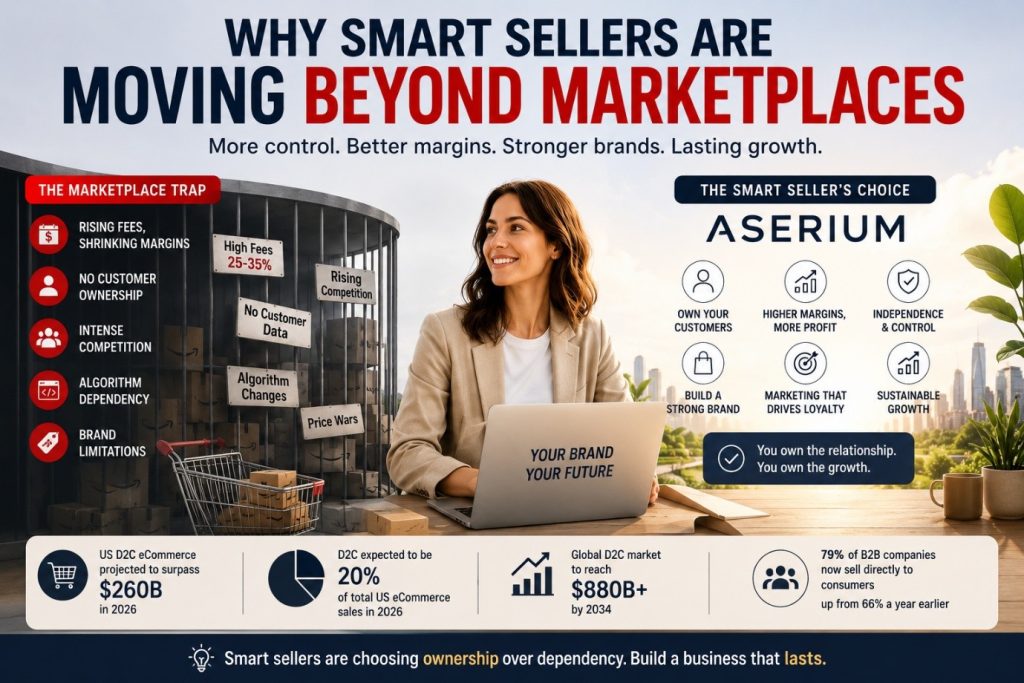
The second wave of ecommerce, the one we are in now, is about ownership. Brands like Warby Parker, Dollar Shave Club, and Casper proved that going direct builds sustainable, defensible businesses. Their model sparked a D2C revolution that hasn’t slowed: the global D2C market is projected to grow from $225 billion in 2024 to over $880 billion by 2034. Even traditional B2B companies are pivoting. 79% now report selling directly to consumers, up from 66% just a year earlier.
The pattern is clear. Sellers who want to build lasting businesses are moving beyond marketplaces, not away from selling.
Why Selling Beyond Marketplaces Is Becoming a Growth Strategy
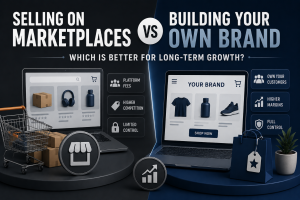
Marketplaces transformed ecommerce by giving sellers instant access to millions of buyers. For many businesses, they remain an important source of revenue.
However, marketplaces were designed to serve customers and platform growth first. Sellers benefit from the ecosystem, but they do not control it.
As competition increases and costs continue to rise, many brands are realizing that relying too heavily on one platform creates long-term limitations. The businesses achieving sustainable growth are building multiple revenue channels instead of depending on a single marketplace.
The Hidden Risks of Marketplace Dependency
One of the biggest challenges sellers face today is marketplace dependency.
When most of a business’s revenue comes from a single platform, even small changes can have a major impact. A change in ranking algorithms, advertising costs, fulfilment policies, or account status can significantly affect sales overnight.
Common marketplace dependency risks include:
- Sudden changes in search visibility
- Rising advertising costs
- Account suspensions or listing restrictions
- Increased competition from private-label products
- Limited control over customer relationships
The issue is not whether marketplaces are good or bad. The issue is concentration risk. Businesses that rely on one channel for the majority of revenue are often more vulnerable than businesses with diversified sales channels.
Rising Fees Are Making Independent Ecommerce More Attractive
Marketplace fees have steadily increased over the years.
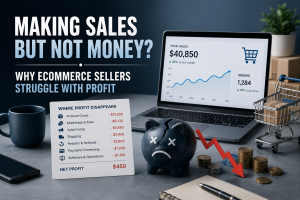
Referral fees, fulfilment costs, storage fees, advertising expenses, and promotional spending can consume a substantial percentage of revenue before a seller calculates profit.
As margins become tighter, many brands are looking for ways to increase profitability through independent ecommerce channels where they have greater control over pricing, customer acquisition, and retention.
The goal is not necessarily to replace marketplaces entirely. Instead, sellers are creating additional revenue streams that are less affected by platform fees and policy changes.
Why Customer Ownership Matters More Than Ever
One of the most valuable assets in ecommerce is customer data.
When a customer purchases through a marketplace, the platform largely controls the relationship. Sellers often have limited opportunities to communicate directly with buyers, build loyalty programs, or create long-term retention strategies.
In contrast, independent ecommerce channels allow businesses to:
- Build email and SMS subscriber lists
- Create personalized customer experiences
- Increase repeat purchases
- Develop loyalty programs
- Improve customer lifetime value
Customer ownership creates long-term business value because the relationship belongs to the brand rather than the platform.
How Direct-to-Consumer Ecommerce Is Changing Retail
The growth of direct-to-consumer ecommerce reflects a broader shift in consumer behavior.
Customers increasingly want to buy directly from brands they trust. They expect personalized experiences, unique products, and stronger brand relationships.
As a result, many successful sellers are investing in:
- Branded ecommerce websites
- Social commerce channels
- Email marketing programs
- Content marketing
- Community-building initiatives
These assets generate value over time and reduce dependence on external platforms.
What High-Growth Sellers Are Doing Differently
The most successful examples of selling beyond marketplaces are not companies that abandoned marketplaces entirely. Instead, they expanded into owned channels while continuing to leverage marketplaces strategically.
They Build Owned Audiences
Email subscribers, SMS lists, and social communities provide direct access to customers without relying on marketplace algorithms.
They Invest in Brand Equity
Strong brands compete on value rather than price. They create customer loyalty and reduce the pressure to constantly compete against lower-cost alternatives.
They Diversify Revenue Channels
Rather than depending on a single marketplace, they develop multiple sources of revenue across marketplaces, direct sales channels, social commerce, and strategic partnerships.
They Focus on Long-Term Growth
High-growth sellers prioritize customer lifetime value, repeat purchases, and sustainable acquisition strategies instead of short-term sales spikes.
How to Start Selling Beyond Marketplaces
Moving beyond marketplaces does not require abandoning existing channels.
Many sellers begin by introducing one additional revenue source while maintaining their marketplace presence. Over time, these independent channels become increasingly important contributors to overall growth.
The objective is simple: build a business that is not dependent on any single platform for its success.
For sellers ready to take the next step, our guide on how to reduce marketplace dependency as a seller provides a practical framework for building a more resilient ecommerce business.
How Aserium Supports Independent Ecommerce Growth
Aserium was built for sellers who want more control over their business while still benefiting from marketplace-style buyer discovery.
Unlike traditional marketplaces, Aserium helps sellers strengthen brand visibility, maintain greater ownership of customer relationships, and develop independent revenue streams that support long-term growth.
For brands seeking a practical path toward ecommerce independence, Aserium provides a bridge between marketplace selling and fully independent commerce.
Conclusion
The trend toward selling beyond marketplaces is accelerating as more ecommerce brands seek greater control over their growth. Sellers who build owned audiences, diversify revenue streams, and strengthen their brand presence are better positioned for long-term success.
Marketplaces will continue to play an important role in ecommerce. But the most successful sellers are no longer relying on them exclusively.
They are building independent ecommerce businesses designed for resilience, profitability, and long-term growth.
The future belongs to businesses that embrace selling beyond marketplaces while using marketplaces strategically as one part of a broader growth strategy.
Ready to take your first step toward real independence? Start selling on Aserium today.
Never settle for less.